Okay, okay. I cannot take full credit for that title either.
Jill R. Ehnenn opens her article up situating the reader into a queer reading of J.K. Rowling's pinnacle series. By inscribing new meaning onto one of pop culture's most pivotal characters, Harry Potter, we instantly begin to see our favorite wizard in a brand new light. Framing Harry Potter as looking like a lesbian, Ehnenn offers up the queer liminality that Harry Potter offers to its readers. Beyond a reading that analyzes the fantastical elements of the series, Ehnenn approaches the series from a unique lens. She chooses to find certain distinctions between fantasy text and queer text and find parallels between the two. But more than how the series functions as a non-normative reading of the queer identity, she offers up something a little extra-- she tells us precisely why the series is a crucial reading of queer politics.
In a way, we all know what it is like to be different. At times, we feel like we are on the outside, isolated, so far removed from our realities that we need to escape. On a surface level, Harry Potter works as an identity marker for so many of us who have felt like we do not belong. The stories are fantastic, whimsical, and empowering. But if we look beyond it as a mere form of escapism, we can also see that however fictional Harry Potter's adventures may be, in a way, we can all relate in some capacity. Ehnenn details that this may be especially important for queer youth and queer readers. I mean, let's think about it here for a second: Harry Potter begins his life living in a closet under the stairs. Why did I not draw that correlation before?? Ehnenn explains that in the world of Muggles v. Wizards, Harry is the queer, unspoken for identity. When we first meet him in the series, we know that he is bound to do great things-- the series is his name, after all. But living with the Dursley's, we see that he is shamed for his wizarding pedigree. But then he arrives to Hogwarts, and we find that there is no longer shame for who he is. There is pride. There is humility. And there is acceptance. But note! The series does not follow Harry's journey to popularity! Rather, it is about finding that acceptance from true friends.
I know. That may sound corny. But when you get down to it, an analysis such as one that Ehnenn offers was not only inevitable, but it must be read as valued. I know plenty of people who have denounced Harry Potter as a work of the devil-- teaching kids and adults to study witchcraft. That's satan at work right here, folks. Yet, for those who love the series and believe in its ability to empower, there is something so much stronger at work here. In regarding the impact of the series, far after the last page has been read, Ehnenn explains, "They [the Harry Potter books] begin to denaturalize hegemonic ways of perceiving identity and identity categories" (p. 241).
Indeed, Ehnenn concludes her article by insinuating that it is not enough to just sit around and say, "Hmmmm I think Harry Potter is a lesbian" or that there is homoerotic subtext between Harry and Ron (although that is pretty fun) or even that there is weird sexual tension between Hermione and Professor McGonagall. All of these are amusing and could potentially be read in that way. And don't even get me started on how we could view Dumbledore, and Rowling retroactively outing him after the series concluded. Instead, Ehnenn points to the idea that queer texts exceed beyond what makes them different from normative texts. Rather, we should be asking how and why such readings are important. Is it perhaps they empower the reader to think differently? And if so, how? And why do we need such readings. What can they tell us about dominant ideologies. And I leave you with this: think to your favorite book. It may be Harry Potter, it may be something else entirely. Regardless, challenge what you think you have know about that book-- read it again. And read it with a fresh perspective. Don't be afraid to jump right in once more into that world-- and find what makes it queer.
Showing posts with label queer. Show all posts
Showing posts with label queer. Show all posts
Thursday, September 22, 2016

Saturday, September 10, 2016
Build Me an Arc as Fast as You Can!
The reading I do for my classes are like a double-edged sword: sometimes, there's so much that I become overwhelmed. Plato + gay things = WHAT? But other times, the readings I do resonate with me, simply because I was not expecting to take away much from it.
Hence is the case for the primary reading I had this week. Pulling from Queer Popular Culture, I selected Chapter 2, "Queering/Quaring Blackness in Noah's Arc" and was pleasantly surprised. It's hard, I think, to read (and subsequently) write about shows you have never seen, and I was cautious. I chose to read this particular chapter early on because I feel that the bulk of my studies do NOT take into account the racial dimension to queer studies and I felt that I owed it to myself to expand beyond what I already knew.
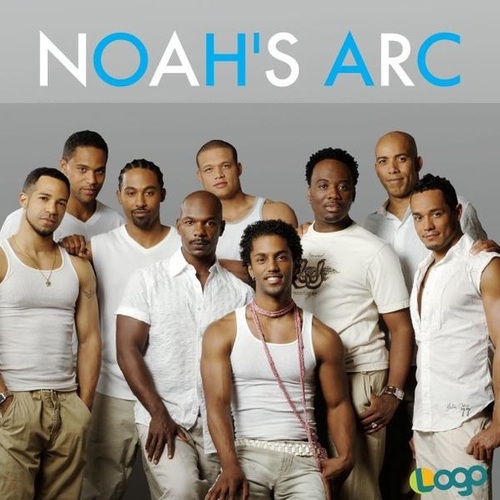
Written by Gust A. Yep and John P. Elia, the article explores Noah's Arc, a series that was "dubbed as the black Queer as Folk, and the black gay Sex and the City" (p. 28), and I already knew that I was into something good here. Although I was unfamiliar with the series, I knew that I was heading into the right territory to figure it out. They begin by using the word quare quite a bit, and I was instantly confused... so much, in fact that I wrote "quare???" at the top of the page. And you may be wondering, "does this have anything to do with queer" and the answer is a hearty YES! In fact, when pinpointing the relationship between the two, they argue that to "queer" something (a text, for example), one attempts to make the familiar unfamiliar, to subvert expectations about what we have come to expect from the media we consume. On the other hand, to quare is calling attention to the whiteness that permeates throughout queer theory. Essentially, it attempts to queer... queer. To find the quareness of a text means to examine the underlying intersections between sexuality with race, class, etc. Interesting, right?
Yep and Elia dive into the series, critiquing how it quares class, gender, and sexuality. What is especially important here is to understand that they offer the lens of quare to analyze how this text, Noah's Arc, functions differently than most texts-- primarily because the series adds on race to conversations-- conversations that would be commonplace from within the cannon of queer literature. They offer individual case studies from the series, circumstances that allow the readers to really see how/why such a discussion is important. By combining the queer identity with the black identity, we are in turn deconstructing how race can be talked about through mediated texts.
Ultimately, texts that focus on the racialized body tend to center on the heterosexual male body, thus ignoring the woman or the gay black man. On the count of three, say it with me: 1... 2... 3 PROBLEMATIC. But what's even more fascinating is that, even though Noah's Arc was picked up by Logo, it was inevitably cancelled after two seasons. Logo, you guys, the GAY CHANNEL. While they do not note this anywhere in their article, it is critical to note what this says about texts that are queering what we already think of as queer. I know, it gets kind of trips after a while, but reading this article made me think critically about the texts that I tend to ignore in the first place. I'm part of the problem, this is true, but beyond that... how do we find a place for queer texts that subvert what we already think of as queer? This is certainly a question I won't be able to answer right now, or even in the coming weeks, but perhaps I can come to some conclusion near the end of the semester.
But while we're at it, I have one more query. I want to watch Noah's Arc. This article really solidified it, what with discussions surrounding HIV, class, and sexual imbalances. But... where can I watch it without paying $60+ to buy the DVD's? If you have any suggestions, let me know.
Hence is the case for the primary reading I had this week. Pulling from Queer Popular Culture, I selected Chapter 2, "Queering/Quaring Blackness in Noah's Arc" and was pleasantly surprised. It's hard, I think, to read (and subsequently) write about shows you have never seen, and I was cautious. I chose to read this particular chapter early on because I feel that the bulk of my studies do NOT take into account the racial dimension to queer studies and I felt that I owed it to myself to expand beyond what I already knew.
 |
| Way to go, Logo! |
Yep and Elia dive into the series, critiquing how it quares class, gender, and sexuality. What is especially important here is to understand that they offer the lens of quare to analyze how this text, Noah's Arc, functions differently than most texts-- primarily because the series adds on race to conversations-- conversations that would be commonplace from within the cannon of queer literature. They offer individual case studies from the series, circumstances that allow the readers to really see how/why such a discussion is important. By combining the queer identity with the black identity, we are in turn deconstructing how race can be talked about through mediated texts.
Ultimately, texts that focus on the racialized body tend to center on the heterosexual male body, thus ignoring the woman or the gay black man. On the count of three, say it with me: 1... 2... 3 PROBLEMATIC. But what's even more fascinating is that, even though Noah's Arc was picked up by Logo, it was inevitably cancelled after two seasons. Logo, you guys, the GAY CHANNEL. While they do not note this anywhere in their article, it is critical to note what this says about texts that are queering what we already think of as queer. I know, it gets kind of trips after a while, but reading this article made me think critically about the texts that I tend to ignore in the first place. I'm part of the problem, this is true, but beyond that... how do we find a place for queer texts that subvert what we already think of as queer? This is certainly a question I won't be able to answer right now, or even in the coming weeks, but perhaps I can come to some conclusion near the end of the semester.
But while we're at it, I have one more query. I want to watch Noah's Arc. This article really solidified it, what with discussions surrounding HIV, class, and sexual imbalances. But... where can I watch it without paying $60+ to buy the DVD's? If you have any suggestions, let me know.
Subscribe to:
Posts (Atom)